Heads up: this post contains affiliate links. If you click through and make a purchase, we may earn a small commission at no extra cost to you — it’s how we keep the lights on and keep publishing free content. We only link to products we’d actually recommend to a friend.
Choosing the right equipment for your fitness journey often feels like a battle between tradition and personal comfort. While heavy bars have long dominated gym floors, many people find that a dumbbell workout offers a more natural path to physical success. These versatile tools allow your limbs to move independently, which helps you maintain better alignment during every repetition.
By using individual weights, you gain greater freedom to adjust your path of motion. This flexibility is essential for those who want to build strength while respecting their unique anatomy. You do not need a massive home gym to see real progress, as these compact items fit perfectly into any living space.
Focusing on functional movement ensures that your training remains consistent and effective over time. Whether you are a beginner or a seasoned athlete, embracing this approach can lead to better results and a more sustainable routine. Let us explore how this method transforms your daily activity into a smarter way to train.
Key Takeaways
- Individual weights allow for a more natural range of motion compared to fixed bars.
- Training with independent loads helps correct muscle imbalances between your left and right sides.
- A compact setup makes it easy to maintain a consistent routine in small home spaces.
- Greater freedom of movement supports better alignment and reduces unnecessary strain.
- Focusing on functional patterns improves your overall strength and daily physical performance.
- Want to get a pump in at home? Get your own set of Amazon Basics Hex dumbbells here.
Affiliate Disclosure: This page contains affiliate links. If you purchase through one of these links, we may earn a commission at no additional cost to you. We only recommend products and services we believe may provide value to our readers.
Why a Dumbbell Workout Supports Joint Health and Range of Motion
Your joints deserve a training approach that respects their natural alignment and movement patterns. When you choose dumbbell exercises, you move away from the rigid constraints of fixed equipment. This shift allows your body to find its own path, which is essential for maintaining long-term joint health.
How Independent Weights Let Each Arm and Shoulder Move Naturally
Traditional barbells force your hands into a fixed position, which often creates tension in the wrists and shoulders. Because dumbbells are independent, each arm can move through a path that feels natural for your specific anatomy. This freedom allows your joints to rotate and adjust throughout the entire movement.
By letting your shoulders track in their own arc, you reduce the risk of impingement. You can find the exact angle that feels stable and strong for your unique frame. This level of customization is a major benefit for anyone looking to train without unnecessary discomfort.
Why a Freer Path Can Reduce Unnecessary Joint Stress
A fixed bar path often forces your joints to compensate for an unnatural movement pattern. When you use dumbbells, you eliminate this forced alignment, which significantly lowers the stress placed on your connective tissues. This joint-friendly approach helps you avoid the repetitive strain that often leads to nagging aches.
You gain the ability to adjust your grip and elbow position on the fly. If a certain angle feels tight, you can simply rotate your wrists or shift your elbows to find a more comfortable groove. This flexibility is a cornerstone of sustainable strength training.
Range of Motion as a Tool for Stronger, More Comfortable Training
Many people mistakenly believe that a larger range of motion is always better, but the goal should be controlled movement. You should only move through a range that feels safe and productive for your body. Using dumbbells allows you to stop at the point where your muscles are fully engaged without pushing into painful territory.
By focusing on quality over quantity, you build strength while protecting your joints. This mindful approach ensures that every repetition contributes to your fitness goals rather than causing wear and tear. Ultimately, listening to your body is the most effective way to ensure your training remains both strong and comfortable for years to come.
How Dumbbells Compare With Barbells for Strength Training
When you step into the weight room, you face a choice between the rigid path of a barbell and the freedom of dumbbells. While both tools build muscle, they interact with your body in fundamentally different ways. Engaging in strength training with dumbbells allows for a more personalized movement experience that adapts to your unique anatomy.
Fixed Bar Paths Versus Self-Selected Movement Paths
A barbell forces your limbs into a single, fixed trajectory. This is excellent for moving heavy loads, but it does not account for the natural rotation of your wrists or the specific width of your shoulders. Your joints are often forced to conform to the bar rather than the other way around.
In contrast, dumbbells allow you to choose your own path. You can rotate your wrists or adjust your elbow angle mid-rep to find the most comfortable position. This freedom of movement is a primary benefit of incorporating dumbbells into your routine.
When Barbell Stability Becomes a Limitation
Barbells provide high levels of stability because the weight is connected across a single beam. This stability is helpful for beginners learning basic patterns, but it can become a drawback for those with joint discomfort. If your shoulders or wrists do not align perfectly with the bar, you may experience unnecessary strain.
Over time, forcing your body into these rigid positions can lead to overuse injuries. By prioritizing strength training with dumbbells, you reduce the risk of locking your joints into painful, repetitive patterns. This flexibility allows you to train harder while keeping your joints happy.
How Dumbbells Expose and Correct Left-to-Right Strength Differences
One of the most significant advantages of dumbbells is their ability to highlight imbalances. When you use a barbell, your stronger side often compensates for your weaker side without you noticing. This can lead to long-term muscle asymmetries.
Dumbbells force each arm to work independently. If your right side is stronger than your left, you will immediately feel the difference during your sets. This feedback loop is essential for building a balanced, symmetrical physique.
Why Barbells Still Have a Place in a Balanced Program
Despite the benefits of dumbbells, barbells remain a staple for a reason. They are unmatched when it comes to moving maximal loads safely and efficiently. For compound movements like the deadlift or back squat, the stability of a barbell allows you to focus on raw power output.
A well-rounded program often includes both tools. You might use barbells to build foundational strength and dumbbells to refine your movement quality and address specific weaknesses. By combining these methods, you get the best of both worlds for your strength training with dumbbells and overall fitness journey.
The Joint-Friendly Advantages of Dumbbell Exercises
Your choice of equipment significantly impacts how your body handles the stress of a workout. While barbells lock you into a rigid path, dumbbells allow for a more natural flow that respects your unique anatomy. This flexibility is a game-changer for anyone looking to train hard without sacrificing long-term joint health.
Neutral-Grip Options for More Comfortable Pressing and Pulling
A neutral grip, where your palms face each other, is often much kinder to the shoulders than a traditional pronated grip. By rotating your wrists, you can reduce the internal rotation that frequently causes impingement. Incorporating shoulder dumbbell exercises with a neutral grip allows you to maintain a stable scapular position throughout the movement.
Adjusting Wrist, Elbow, and Shoulder Positions During Each Rep
One of the greatest benefits of dumbbells is the ability to adjust your arm path mid-rep. If a specific angle feels tight or uncomfortable, you can slightly shift your elbow or wrist to find a smoother groove. This dynamic adjustment ensures that you are not forcing your joints into positions that cause unnecessary friction or strain.
Using a Controlled Range of Motion Without Forcing Painful Positions
It is a common misconception that you must always move through the absolute maximum range of motion to see results. True progress comes from working within a range that you can control with perfect form. If you feel sharp pain at the bottom of a press, simply stop an inch or two higher to keep the tension on your muscles rather than your connective tissues.
“The goal of training is to build strength, not to break your body down. Listen to your joints, as they are the best indicators of whether your movement pattern is truly serving your goals.”
Distinguishing Productive Effort From Joint Discomfort
Learning to tell the difference between muscle fatigue and joint pain is a vital skill for every lifter. Muscle fatigue feels like a burning sensation or a temporary loss of power, which is exactly what you want during shoulder dumbbell exercises. In contrast, joint discomfort often presents as sharp, stabbing, or lingering pain that persists after the set is finished.
If you experience that sharp, localized pain, it is time to adjust your load or your range of motion immediately. Prioritizing comfort does not mean you are taking the easy way out; it means you are training smart. By staying within a pain-free zone, you ensure that you can keep showing up to the gym consistently for years to come.
Building an Upper Body Dumbbell Workout Around Natural Movement
Designing an effective upper body dumbbell workout requires a focus on how your joints naturally move through space. By choosing movements that allow for individual adjustments, you can maintain high intensity while protecting your long-term joint health. The goal is to prioritize smooth, controlled repetitions rather than chasing the heaviest weight on the rack.
Chest Press Variations That Allow Individual Shoulder Paths
When you perform a chest press with dumbbells, you are not locked into a fixed bar path. This freedom allows your shoulders to rotate slightly, which is often much more comfortable than a rigid barbell movement. You can adjust your grip to a neutral position, palms facing each other, to reduce stress on the front of the shoulder.
Focus on keeping your shoulder blades retracted against the bench throughout the movement. This stability ensures that the chest muscles do the work while your joints remain in a safe, supported position.
One-Arm Rows for Back Strength and Scapular Control
One-arm rows are excellent for building back strength while allowing your torso to remain stable. By supporting yourself on a bench, you can focus entirely on the pulling motion without straining your lower back. This exercise encourages better scapular control, as you can feel each side working independently.
Try to pull the dumbbell toward your hip rather than straight up to your chest. This subtle change in angle often feels more natural and helps engage the latissimus dorsi more effectively.
Shoulder Dumbbell Exercises for Pressing, Raising, and Stabilizing
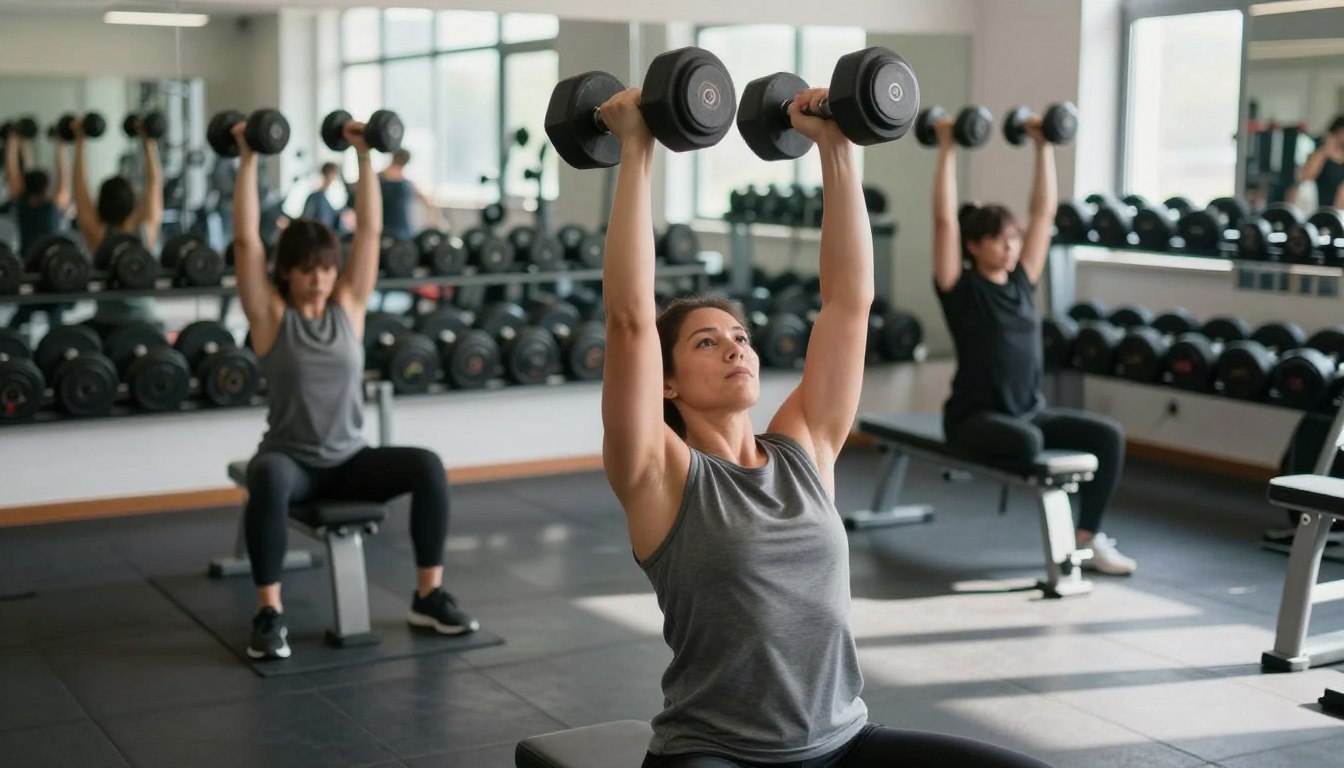
Shoulder training should emphasize controlled movement patterns that avoid painful overhead positions. You can start with seated presses to provide extra stability for your spine. If overhead pressing causes discomfort, consider performing lateral raises or front raises with a lighter load to build strength safely.
Always maintain a slight bend in your elbows during these movements. This simple adjustment prevents locking out the joint and keeps the tension focused on the deltoid muscles.
Dumbbell Exercises for Arms With Comfortable Elbow Positions
Finding the right dumbbell exercises for arms is all about respecting your natural elbow alignment. For bicep curls, you can rotate your wrists during the movement to find the path that feels best for your forearms. Hammer curls are a fantastic alternative if standard curls cause wrist or elbow irritation.
For triceps, overhead extensions or kickbacks allow you to isolate the muscle without needing heavy weight. Consistency and form are far more important than the size of the dumbbell when you are training for longevity. By keeping your movements smooth and deliberate, you will see better results without the risk of overuse injuries.
Effective Dumbbell Exercises for Full-Body Strength
Effective dumbbell workouts provide the perfect foundation for developing total-body power and stability. By focusing on movement patterns that mirror your daily activities, you can improve how you lift groceries, climb stairs, or stand up from a chair. These exercises build functional strength that translates directly into a more capable and resilient body.
Goblet Squats for an Accessible Squatting Pattern
The goblet squat is a fantastic way to learn proper squat mechanics while keeping your spine upright. By holding a single dumbbell against your chest, you create a natural counterbalance that helps you sit back into your hips. This movement is essential for maintaining the ability to squat comfortably as you age.
Dumbbell Romanian Deadlifts for Hip Strength and Hamstring Control
To build a strong posterior chain, the Romanian deadlift is unmatched. This exercise teaches you to hinge at the hips rather than rounding your back, which is vital for picking up heavy objects safely. Consistent practice with this movement strengthens your hamstrings and glutes, providing better support for your lower back.
Split Squats and Lunges for Balance and Unilateral Strength
Training one leg at a time helps you identify and correct strength imbalances that often go unnoticed. Split squats and lunges force your core to stabilize your body, improving your balance for activities like walking on uneven ground. These movements are highly effective dumbbell workouts for anyone looking to improve their athletic performance or daily mobility.
- Keep your torso tall during lunges to engage your core.
- Focus on a controlled descent to maximize muscle recruitment.
- Use a weight that allows you to maintain perfect form throughout the set.
Farmer Carries for Grip, Posture, and Whole-Body Stability
The farmer carry is perhaps the most practical exercise you can perform. By simply walking while holding heavy dumbbells at your sides, you challenge your grip strength, shoulder stability, and core endurance. This movement mimics the physical demand of carrying luggage or heavy bags, making it a staple in any well-rounded fitness program.
How Unilateral Dumbbell Training Improves Balance and Control
Unilateral work provides a unique window into how your body truly functions under load. By isolating each limb, you can identify subtle movement flaws that often go unnoticed during standard two-handed lifts. This approach is essential for building a balanced and resilient physique.
Why Training One Side at a Time Reveals Compensation Patterns
When you use both hands or legs simultaneously, your stronger side often masks the weaknesses of the other. Unilateral dumbbell training forces each side to work independently, making it impossible for one limb to “carry” the other. You will quickly notice if one shoulder tracks differently or if one hip drops during a movement.
Identifying these patterns early allows you to address them before they lead to injury. Consistency in these movements helps you build a more symmetrical foundation for all your future training.
Using Single-Arm and Single-Leg Movements to Build Stability
Incorporating single-arm dumbbell exercises into your routine is a highly effective way to improve joint stability. Movements like the single-arm row or the split squat require your body to fight against rotation. This constant need for stabilization engages smaller, supporting muscles that are often neglected.
These exercises teach your brain to coordinate movement more efficiently. As you master these patterns, you will find that your overall balance improves significantly during daily activities.
How Offset Loading Challenges the Core Without Excessive Weight
You do not need heavy plates to challenge your core effectively. By holding a weight on only one side of your body, you create an “offset” load that forces your core to work overtime to keep you upright. This technique is excellent for building functional strength without putting unnecessary stress on your spine.
| Movement Type | Primary Benefit | Core Engagement |
|---|---|---|
| Bilateral Press | Maximum Load | Low |
| Single-Arm Press | Stability | High |
| Offset Carry | Posture | Very High |
Progressing From Supported Positions to Freestanding Exercises
Start your journey with supported movements to ensure safety and proper form. For example, perform rows while leaning on a bench to stabilize your torso. Once you feel confident and stable, you can transition to freestanding versions of these exercises.
Moving to a freestanding position increases the demand on your balance and coordination. This progression ensures that you continue to challenge your body while maintaining perfect technique throughout every repetition.
Choosing Dumbbell Loads, Repetitions, and Range of Motion
Precision in your training volume and load selection transforms how your body responds to exercise. By focusing on quality rather than just the number on the weight, you ensure that every movement serves your long-term health. Proper dumbbell load selection is the foundation of a sustainable fitness journey.
Selecting a Weight That Preserves Technique
The most effective weight is one that allows you to maintain perfect form from the first rep to the last. If your movement pattern breaks down, your joints often take the brunt of the stress. Always prioritize control over moving the heaviest possible iron.
If you find yourself swinging or using momentum to complete a set, the weight is likely too heavy. Dropping to a lighter pair of dumbbells allows you to engage the target muscles more effectively. This shift keeps your joints safe while still providing a significant stimulus for growth.
Using Repetition Ranges for Strength, Muscle Growth, and Joint-Friendly Volume
Different dumbbell repetition ranges serve unique purposes in your training program. Lower ranges, typically between five and eight reps, are excellent for building raw strength. These sets require heavier loads but demand strict focus on stability.
For muscle growth, moderate ranges of eight to twelve repetitions are often the sweet spot. If you are looking to improve endurance or manage joint sensitivity, higher ranges of fifteen to twenty reps work wonders. These higher volumes allow you to achieve a great pump without needing excessive weight that might irritate your connective tissues.
When to Increase Weight, Repetitions, or Movement Difficulty
Progressive overload is essential, but it does not always mean adding more weight. You can increase the total repetitions in a set or decrease your rest periods to keep challenging your body. When you can comfortably hit the top end of your target rep range with perfect form, it is time to progress.
You might choose to increase the weight by the smallest available increment. Alternatively, you can make the movement more difficult by slowing down your tempo. This smart approach ensures you continue to see results without risking injury.
How Tempo, Pauses, and Isometric Holds Add Challenge Without Heavier Loads
You do not always need a heavier dumbbell to make an exercise harder. By manipulating the tempo, you increase the time your muscles spend under tension. Try a three-second eccentric phase—the lowering part of the lift—to feel a deeper burn.
Adding a two-second pause at the most difficult part of the movement also builds incredible stability. Isometric holds, where you freeze the weight in place, force your muscles to work harder without the need for extra load. These techniques are perfect for joint-friendly training while still pushing your limits.
Dumbbell Workouts for Beginners and Lifters Managing Joint Limitations
If you are new to strength training, dumbbell workouts for beginners provide a safe and effective way to build muscle. Starting with the right approach helps you master movement patterns while keeping your joints happy and healthy.
Starting With Supported and Stable Dumbbell Exercises
When you first begin, stability is your best friend. Using supported positions, such as sitting on a bench or leaning against a wall, removes the need for complex balance. This allows you to focus entirely on the quality of each repetition.
- Seated Overhead Press: Provides back support while you work your shoulders.
- Chest-Supported Rows: Keeps your spine neutral and prevents lower back strain.
- Glute Bridges: A stable way to activate your posterior chain without heavy loading.
Creating a Beginner-Friendly Full-Body Dumbbell Session
A simple, full-body routine is the most efficient way to see progress. You can perform these movements two to three times per week to build a strong foundation. Focus on controlled tempos rather than heavy weight.
Try this simple circuit to get started:
- Goblet Squats: Hold one dumbbell at your chest to improve posture.
- Dumbbell Romanian Deadlifts: Focus on a slow hinge to feel your hamstrings.
- Floor Press: A safer alternative to the bench press for your shoulders.
- Single-Arm Rows: Use a bench for support to keep your back flat.
- Farmer Carries: Walk slowly while holding weights to build total-body stability.
Modifying Exercises for Sensitive Shoulders, Wrists, Knees, or Hips
It is perfectly normal to adjust movements to fit your body. If a specific angle causes discomfort, you should always look for a variation that feels neutral. For example, if your wrists hurt during pressing, try using a neutral grip with your palms facing each other.
For sensitive knees, shorten your range of motion in squats or use a box to limit depth. If your shoulders feel tight, keep your elbows tucked closer to your torso. Small tweaks often make a massive difference in how you feel during and after your session.
When to Stop Training and Seek Professional Guidance
Listening to your body is a vital skill for any lifter. While muscle soreness is common, sharp or shooting pain is a clear signal to stop immediately. If you experience persistent joint pain that does not go away with rest, it is time to consult a physical therapist or a qualified trainer.
“True strength is built through consistency and the ability to recognize when your body needs a change in approach.”
Never push through pain in hopes of seeing faster results. Prioritizing your long-term health ensures that you can continue your dumbbell workouts for beginners for years to come.
How to Program Dumbbell Workouts for Long-Term Joint Freedom
Building a body that lasts involves a thoughtful approach to movement patterns and recovery. When you focus on long-term dumbbell programming, you move away from short-term gains and toward a sustainable lifestyle. This strategy ensures your joints remain healthy while you continue to build functional strength.
A truly joint-friendly strength program relies on variety and balance. By rotating through different movement categories, you prevent overuse injuries and keep your muscles engaged in new ways.
Balancing Pressing, Pulling, Squatting, Hinging, and Carrying
To create a balanced routine, ensure every week includes at least one exercise from each fundamental category. Pressing and pulling movements build your upper body, while squats and hinges target your legs and lower back. Adding carries provides a unique challenge for your core and grip strength.
This holistic approach prevents muscle imbalances that often lead to discomfort. By spreading these patterns across your weekly schedule, you allow specific muscle groups to rest while others work.
Combining Heavy Strength Sets With Controlled Mobility Work
You do not need to lift heavy weights during every single session to see progress. Instead, alternate your heavy strength days with sessions focused on controlled mobility and technique. This method keeps your joints fluid and reduces the risk of inflammation.
Using lighter weights for mobility work allows you to explore your full range of motion safely. This practice is a cornerstone of any effective joint-friendly strength program.
Scheduling Recovery Between Upper Body and Full-Body Sessions
Recovery is just as important as the time you spend lifting. Aim to schedule at least one rest day between intense full-body workouts to let your central nervous system recover. If you prefer an upper-body split, ensure you alternate those days with lower-body or active recovery sessions.
Tracking Pain, Performance, Range of Motion, and Exercise Quality
Stop relying solely on the weight on the dumbbell to measure your success. Instead, track your long-term dumbbell programming by noting how your joints feel after each session. If you notice persistent pain, adjust your range of motion or reduce the load immediately.
| Movement Category | Primary Benefit | Example Exercise |
|---|---|---|
| Pressing | Upper Body Strength | Dumbbell Bench Press |
| Pulling | Posture and Back Health | Single-Arm Row |
| Squatting | Leg and Core Stability | Goblet Squat |
| Hinging | Posterior Chain Power | Romanian Deadlift |
| Carrying | Whole-Body Endurance | Farmer Carry |
Conclusion
Choosing the right tools for your fitness journey shapes how your body feels today and years from now. Dumbbells offer a unique way to honor your anatomy while building muscle and bone density. Embracing these tools allows you to move in ways that feel natural and sustainable.
You do not need to abandon barbells to see progress. Instead, you can integrate a joint-friendly dumbbell workout to address imbalances and improve your movement quality. This approach helps you maintain physical independence as you age by focusing on control rather than just raw weight.
The primary dumbbell training benefits include better unilateral stability and a personalized range of motion. By selecting weights that allow for perfect form, you protect your joints while challenging your muscles. Consistency remains the most important factor in your long-term success.
Start small by tracking your performance and listening to your body. Adjust your intensity based on how your joints respond to each session. You now have the framework to build a routine that supports your health for a lifetime.
FAQ
Why should I choose a dumbbell workout over using a traditional barbell?
While barbells are excellent for lifting maximal loads, a dumbbell workout offers superior joint health by allowing each limb to move independently. This freedom of movement accommodates your unique body mechanics, making it much easier to find comfortable, natural paths for your wrists, elbows, and shoulders compared to the fixed position of a bar.
How do dumbbell exercises specifically support joint longevity?
Unlike rigid machines or barbells, dumbbell exercises allow for “self-selected” movement paths. For example, if you have a history of shoulder discomfort, you can rotate your palms to a neutral grip (facing each other) during a press. This flexibility reduces unnecessary stress on the connective tissues while still allowing for a challenging and productive session.
Can I build significant muscle and strength training with dumbbells alone?
Absolutely. Strength training with dumbbells is highly effective because it requires more stabilization from smaller supporting muscles. Furthermore, because dumbbells force each side of the body to carry its own weight, they are the gold standard for identifying and correcting left-to-right strength imbalances that are often hidden by barbell training.
What are the best shoulder dumbbell exercises for someone with limited mobility?
For those with mobility restrictions, exercises like the neutral-grip overhead press or the scaption (a lateral raise performed in the “scapular plane”) are excellent. These shoulder dumbbell exercises allow the shoulder blade to move naturally without “pinching” the joint, helping you build stability and strength without forcing a painful range of motion.
How should I structure a comprehensive upper body dumbbell workout?
A well-rounded upper body dumbbell workout should balance “pushing” movements, like chest presses, with “pulling” movements, like one-arm rows. To round out the session, include specific dumbbell exercises for arms, such as hammer curls and tricep extensions, which allow you to adjust your wrist position to avoid elbow strain.
Are there effective dumbbell workouts that target the entire body?
Yes, you can achieve a high level of fitness with effective dumbbell workouts that focus on foundational patterns. Combining goblet squats, Romanian deadlifts, and farmer carries will challenge your legs, core, and grip simultaneously. These movements translate directly to real-world tasks, such as carrying heavy luggage or lifting objects from the floor safely.
What are the best dumbbell workouts for beginners who are just starting out?
The most successful dumbbell workouts for beginners prioritize stability and movement quality. Starting with supported exercises—such as a chest-supported row or a seated overhead press—allows the lifter to focus on the “feel” of the muscle working. As balance and confidence improve, you can transition to freestanding exercises like lunges or standing presses.
How do I know when to increase the weight or difficulty of my exercises?
Progression should never come at the expense of technique. Once you can complete all your repetitions with a smooth tempo and a full, pain-free range of motion, you can consider a heavier load. Renowned coaches like Dan John often suggest that if you can’t control the weight on the way down, it is likely too heavy for your current level of stability.
How often should I train to see results without overtaxing my joints?
Most trainees find success by scheduling three to four sessions per week, alternating between upper-body and full-body routines. This allows for adequate recovery. By tracking your performance and joint comfort rather than just the numbers on the weight stack, you can ensure long-term progress. If you ever experience sharp or escalating pain, it is essential to stop and consult a professional, such as a physical therapist from Select Physical Therapy, to address the underlying issue.
Leave a Reply